
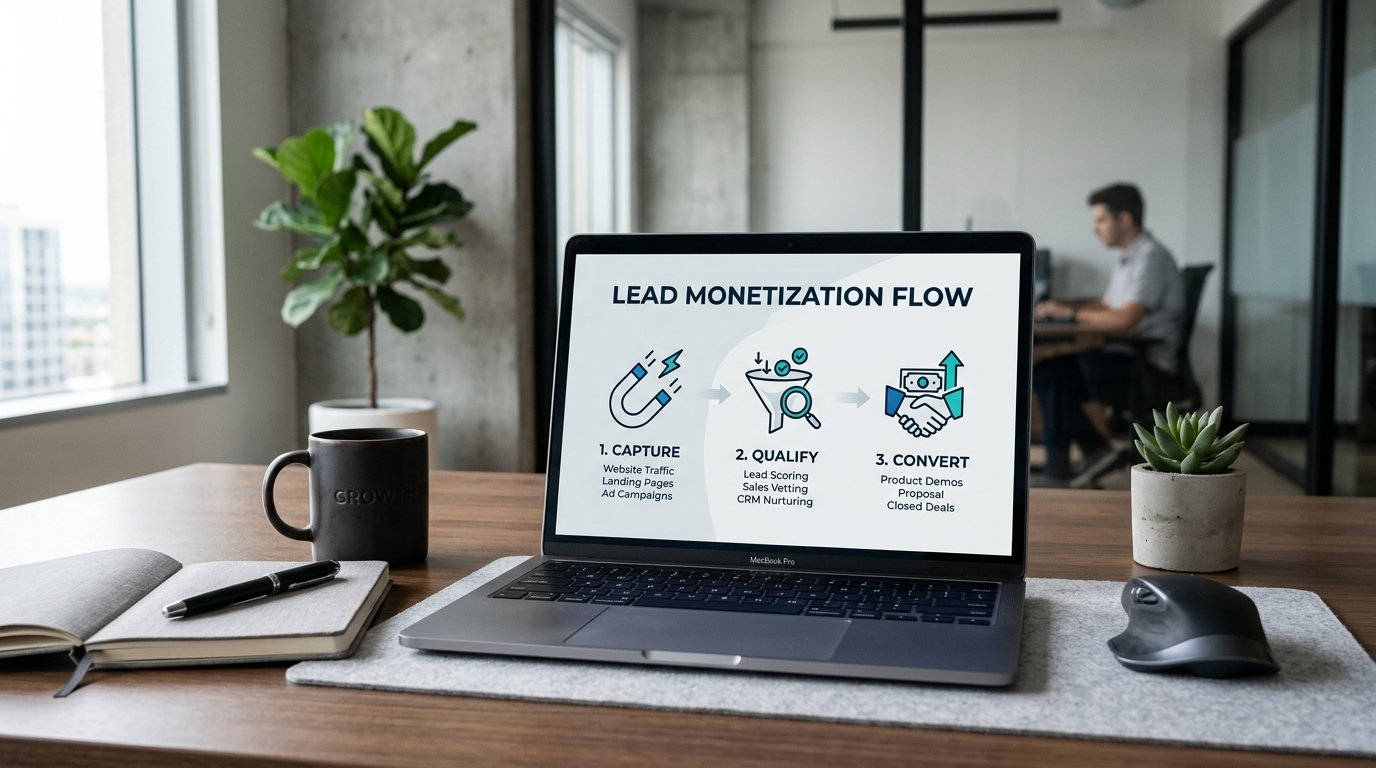
Selling real estate leads means converting prospects into paying clients, not flipping leads to other agents. The best way to sell real estate leads is through a systematic approach: qualify prospects using BANT and CHAMP frameworks, respond within five minutes, follow up 8 to 12 times across multiple channels, use proven scripts for FSBO and expired listings, and set clear appointments. Most agents fail because they give up after 2 or 3 touches—but the fortune is in the follow-up.
Introduction: The Real Problem Isn’t Lead Generation—It’s Lead Conversion
You’re generating leads. Maybe you’re buying them from portals. Maybe you’re earning them through your website. Maybe you’re getting them from social media ads. But here’s the hard truth that keeps most agents stuck: you have a CRM full of names that never turn into closings.
Fact #1: The average real estate conversion rate across all lead sources is only 2% to 5%. That means for every 100 leads you generate, you might close just 2 to 5 deals.
Fact #2: Online leads convert at an even lower rate—just 0.4% to 1.2%. That’s why an agent may need between 83 and 250 online leads to close a single transaction.
Here’s the pattern that kills most agents’ businesses:
- You get a lead
- You make first contact
- The lead says “let me think about it”
- You make a note to circle back
- You never do—or you circle back once and give up
Multiply that by a year, and you have a CRM full of abandoned conversations. Every one of those conversations was a potential deal. Most of them still are. They just need someone to come back.
That’s not a lead problem. That’s a follow-up problem. And no amount of new lead generation fixes it, because every new lead will leak out of the same hole.
Before you spend another dollar on lead generation, you need a conversion system. Here’s exactly how to build one.
Step 1: Qualify Your Leads—Separate the Serious from the Curious
What Is Lead Qualification in Real Estate?
Lead qualification is the process of evaluating a prospect to determine their likelihood of becoming a client. It’s about separating signal from noise—figuring out who’s actually ready to buy or sell versus who’s just browsing.
Why it matters: If you treat every lead the same way, you’ll waste time on people who were never going to buy and neglect the ones who are ready to move now.
Qualification should happen during your very first conversation. Ask the right questions, and you’ll instantly know whether to prioritize this lead or move them to a nurture track.
The Two Qualification Frameworks You Must Use: BANT and CHAMP
What is the BANT Framework in Real Estate?
BANT stands for:
- Budget: What can the client afford, and how will they pay? Are they pre-approved with a lender? Do they have proof of funds?
- Authority: Who makes the final decision? For families, it may be both spouses. For investors, it could be a business partner.
- Need: What problem are they solving? Are they upsizing, downsizing, relocating for a job, or getting divorced?
- Timeline: When do they need to move? A lease expiring in two weeks is very different from a “someday” plan.
What is the CHAMP Framework in Real Estate?
CHAMP stands for:
- Challenges: What is stopping them today? Are there too few listings? Are they worried about mortgage rates?
- Authority: Who calls the shots?
- Money: What budget or price range are they comfortable with? For sellers, what return are they expecting?
- Prioritization: Where does this move rank among their other goals?
Tip: Use both frameworks during your initial discovery call. Ask specific questions like: “What prompted you to start looking now?” and “Have you been pre-approved with a lender?” The answers will tell you immediately whether this lead is worth chasing or should be nurtured for later.
Decoding the “Motivated Seller”—Signals You Can’t Ignore
A motivated seller is someone who prioritizes a quick, hassle-free sale over getting the absolute highest price. These are the leads that convert fastest and easiest. Here are 7 signals that tell you a seller is motivated:
- The home is vacant. If a home is empty, the seller is likely paying carrying costs on a property that isn’t generating income.
- The listing says so. Sometimes it’s right there in black and white: “quick possession available” or “motivated seller.”
- The property has been re-listed. If a home is back on the market after a previous deal fell through, the seller is often more motivated to close quickly.
- The list price seems low for the market. A price below market value can signal a seller willing to accept less in exchange for a quick closing.
- The home has been on the market for months. If it’s been sitting unsold for an extended period, the seller may be highly motivated.
- The home comes with lots of extras. Motivated sellers sometimes sweeten the deal with furniture, appliances, or other inclusions.
- Foreclosure or pre-foreclosure. Financial distress often means a seller needs to close quickly.
Tip: When you spot these signals, prioritize that lead immediately. Send them a comparative market analysis, a home valuation, and a clear plan for what you can do differently than the last agent.
Building a Simple Lead Scoring Model
Lead scoring is a system that assigns points to leads based on their behavior and characteristics, helping you prioritize who to call first.
Behavioral Signals
| Action | Points |
| Viewed 10+ listings in the last week | +10 |
| Downloaded a buyer’s guide | +5 |
| Opened your last three emails | +5 |
| Filled out a contact form | +10 |
| Called your office directly | +20 |
Intent Signals
| Action | Points |
| Is pre-approved with a lender | +25 |
| Has a specific move-in date within 90 days | +30 |
| Is selling and buying simultaneously | +20 |
| Mentioned divorce or relocation | +15 |
Source-Based Adjustment
| Source | Points |
| Referral | +20 |
| Website inquiry | +10 |
| Social media ad | +5 |
| Purchased lead list | +0 |
The Rule: Leads with scores above 50 get daily follow-up. Leads with scores between 25 and 50 get weekly follow-up. Leads below 25 go into a nurture sequence for quarterly check-ins.
Tip: Use your CRM to automate this scoring process. When a lead hits a certain score threshold, the system should automatically flag them for immediate follow-up.
Step 2: Master the Follow-Up—The “Fortune Is in the Follow-Up”
The “5-Minute Rule” and Why Speed-to-Lead Is Non-Negotiable
Fact #3: Leads contacted within five minutes are 21 times more likely to be qualified than leads contacted after 30 minutes.
Fact #4: 78% of customers choose the first company that responds to their inquiry. Response rate drops by 80% within the first hour.
If you’re not contacting new leads within minutes, you’re losing them to faster agents.
How to implement speed-to-lead:
- Connect your website forms and portal leads directly to a CRM that automatically notifies you immediately
- Set up automated text and email confirmations the moment a lead submits their information
- When a lead comes in, call them within 5-10 minutes—ideally within 1 minute
- If they don’t answer, leave a voicemail and send a text immediately
Tip: The first message should be simple: “Thanks for your inquiry—I’m calling to see if now is a good time to chat about your needs.” Don’t pitch—just open the conversation.
The Multi-Channel Follow-Up Cadence (The “8-12 Touch” Rule)
Fact #5: Most buying decisions require 8 to 12 touches before a lead converts. Yet most agents stop after just 2 or 3 attempts. This is the single biggest reason agents fail to sell their leads. They give up too soon.
Follow-Up Cadence Example
| Day | Channel | Action |
| Day 0 (Within 5 mins) | SMS + Email | Auto-confirmation: “Thanks for your inquiry. I’ll call you shortly.” |
| Day 0 (Within 10 mins) | Phone Call | First contact. Use BANT/CHAMP to qualify. Ask: “What prompted you to start looking now?” |
| Day 1 | Email + SMS | Send “Info Package”—listing details, comps, or a shortlist of available homes |
| Day 3 | SMS + Call | Follow-up: “Quick question—are you looking to move in the next 30-90 days, or just exploring?” |
| Day 5 | Send a “State of the Market” report or neighborhood insights | |
| Day 7 | Phone Call | Soft appointment ask: “Should I keep an eye out for new matches, or should we pause for now?” |
| Week 2-3 | Direct Mail | Send a “Just Sold” card in their neighborhood |
| Month 1+ | Nurture Sequence | Monthly email with market updates, tips, and case studies |
Tip: Don’t just follow up to “check in.” Every contact should provide value—market data, neighborhood updates, answers to their questions. Value builds trust, and trust builds deals.
Categorizing Leads for Smarter Follow-Up
Not every lead deserves the same follow-up frequency. Segment your leads into categories based on their readiness:
- A Leads (Hot): Ready to buy or sell now. Contact daily or every other day.
- B Leads (Warm): Considering but not yet committed. Contact weekly.
- C Leads (Cold): Showed interest but aren’t active. Contact monthly.
Tip: Even cold leads are worth pursuing—they might become active when the time is right. A simple “checking in” message that provides value can revive a lead that’s been dormant for months.
Automating the Nurture Process
Drip campaigns are automated email and text sequences that keep you top-of-mind without manual effort.
Intent-Based Automation: Set up paths based on the lead’s qualification:
- A “seller” lead gets a seller-specific drip—prep tips, market analysis, recent sales data
- A “buyer” lead gets a buyer-specific drip—neighborhood guides, financing tips, new listing alerts
Tip: Use your CRM’s automation features to trigger follow-ups based on lead behavior. If a lead opens an email, sends a follow-up text. If a lead clicks a link, send a relevant article or listing.
Step 3: Convert with the Right Scripts and Appointment Setting
FSBO Scripts (Turning DIY Sellers into Clients)
Mindset: Don’t push. You’re a consultant solving their problem, not a salesperson hunting for a listing.
Script Focus:
- “What methods are you using to market your home right now?”
- “How are you handling showings with your current schedule?”
- “What’s your plan for negotiating when you get an offer?”
- “If you were to list again, what would you want done differently?”
Tip: Send a “Pre-Listing Package” that shows your marketing plan for their home—professional photography, social media promotion, email blasts, and your network of buyers. This builds trust by showing you’ve thought it through.
Expired Listing Scripts (The Consultant, Not the Vulture)
Mindset: They’ve had a bad experience. Empathize, don’t criticize.
Script Focus:
- “What do you think prevented your home from selling?”
- “Were you happy with the marketing approach your previous agent used?”
- “If you had a do-over, what would you want done differently?”
- “Would you be open to a fresh market analysis to see if the price needs adjusting?”
Tip: Send a “Second Chance” package—a new marketing plan that shows exactly what you’ll do differently from the last agent. Be specific about your strategy.
The Discovery Call—Asking the Right Questions
The goal of the discovery call isn’t to sell—it’s to understand. Ask open-ended questions that reveal the lead’s true situation:
For Buyer Leads:
- “What’s prompting you to start looking now?”
- “Are you pre-approved with a lender, or would you like a referral?”
- “What’s most important to you—location, price, or house type?”
- “What’s your ideal timeline for moving in?”
For Seller Leads:
- “What’s your timeline for selling?”
- “Who else is involved in the decision to sell?”
- “What are you most worried about when it comes to selling?”
- “What do you think would make your home stand out to buyers?”
Tip: Write their answers down in your CRM. Reference them in every future interaction. Nothing builds trust like remembering details.
The Appointment Close
The goal is to move from a phone call to a meeting. Script it this way:
For buyers: “If you’re open to it, I’d like to set up a quick 15-minute buyer consultation where we can go over your specific needs and create a plan that works for you. Is tomorrow evening or Friday morning better?”
For sellers: “I’d love to walk through your home and provide a more accurate market analysis—it only takes about 20 minutes. Are you available this weekend or early next week?”
Handling Common Objections
Objection: “We’re not ready yet.”
Response: “That’s completely understandable. Most buyers take months before they feel ready to make a move. Would it be helpful if I sent you a few market reports each month so you can track trends while you’re getting ready? That way when you’re ready to look, you’ll already know what’s happening in the market.”
Objection: “We’re interviewing other agents.”
Response: “I completely understand—it’s smart to compare. What are the key things you’re looking for in an agent? I’d love to show you how I approach each of those areas so you can make an informed decision.”
Objection: “We’re concerned about commission.”
Response: “That’s a fair concern. Let me walk you through everything I do during the selling process—from staging advice to professional photography to negotiation strategy. The commission covers the full marketing and sales process, not just the listing. Once you see what’s involved, you can decide if the value matches the cost.”
Step 4: How to Sell Real Estate Leads (The Pay At Closing Advantage)
Here’s the thing about lead conversion: cost matters. If you’re spending $100 per lead on Google Ads and only converting 2% of them, each sale costs you $5,000 in advertising alone.
Fact #6: The average cost per lead from Google Ads in the real estate industry is over $100. That’s why PayAtClosingRealEstateLeads.us offers a better way. We provide verified, high-intent leads—and you only pay when you actually close the deal.
Traditional Lead Models vs. Pay At Closing
| Traditional | Pay At Closing | |
| Upfront Cost | $50-$200 per lead | $0 |
| Pay When | Immediately | After closing |
| Risk | You absorb cost of bad leads | Zero risk—you only pay for results |
| Lead Quality | Often unverified | Verified, high-intent leads |
With our model, you’re not wasting money on leads that never convert. You can focus entirely on our proven conversion system—qualification, follow-up, and closing—without worrying about wasting your marketing budget.
How It Works
- We deliver high-intent leads directly to you
- You work them through your conversion system
- You only pay us when you close a deal
Why Agents Choose PayAtClosing:
- Zero upfront investment—no wasted money on leads that don’t convert
- Aligned incentives—we succeed only when you succeed
- High-intent leads—we focus on prospects ready to buy or sell
- Transparent reporting—see exactly where leads come from and how they perform
Pricing varies based on your location, market conditions, and specific lead requirements. Contact our team for a personalized quote and to learn about current pricing and available options.
Frequently Asked Questions
How many leads does it take to get one closing?
Nationally, the average conversion rate is 2% to 5%—that means it takes 20 to 50 leads to get one sale. For online leads specifically, the conversion rate drops to 0.4% to 1.2%, meaning you may need 83 to 250 leads for a single closing.
What is a good lead conversion rate in real estate?
A good conversion rate is 8% to 15% overall. However, this depends heavily on the source—referrals convert at 15% to 25%, while online portal leads convert at just 1% to 3%.
How long should I follow up with a lead before giving up?
Don’t give up after 2 or 3 touches—most deals require 8 to 12 touches. If a lead isn’t ready, move them to a nurture sequence and check in monthly or quarterly.
What’s the most important factor in lead conversion?
Speed. Leads contacted within five minutes are 21 times more likely to be qualified. Speed-to-lead is the single strongest predictor of lead conversion success.
What’s the difference between cold, warm, and hot leads?
Cold leads have no prior relationship and haven’t shown active interest. Warm leads have shown some interest—like downloading a guide. Hot leads are actively looking to buy or sell soon. Each category needs a different follow-up cadence—hot leads daily, warm leads weekly, cold leads monthly.
Client Success Story
Sarah M., Broker in Austin, TX
“I was spending $2,000 a month on portal leads and closing maybe one deal every three months. Since switching to PayAtClosing, I’ve closed 4 deals in the last 60 days—and I paid nothing upfront. The conversion system they taught me changed everything. I used to give up after 3 calls. Now I follow up 10 times and my close rate has tripled.”
Conclusion: Stop Leaking Leads
The fortune is not in the first call. It’s in the multi-channel follow-up after. Most agents have a lead generation problem. They think they need more leads when what they really need is a better conversion system.
Your Action Plan
- Qualify: Use BANT and CHAMP to separate serious buyers from curious browsers
- Follow Up: Respond within 5 minutes, then follow up 8 to 12 times across multiple channels
- Convert: Use proven scripts to move leads from “just looking” to “let’s meet”
Stop wasting money on leads you never convert. Get started with PayAtClosingRealEstateLeads.us today and get a high-quality, intent-driven lead system designed to close.